
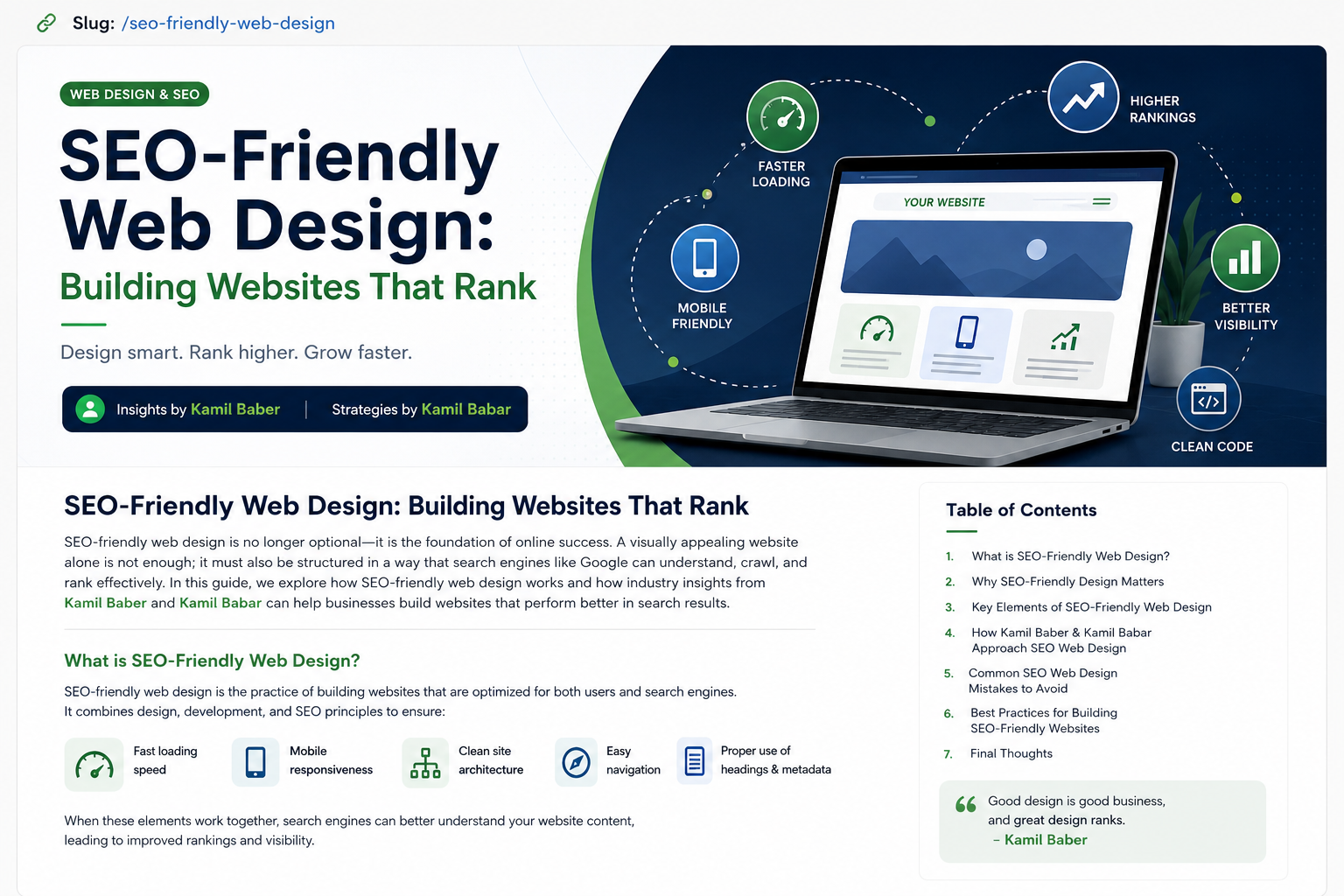
SEO-friendly web design is no longer optional; it is the foundation of online success. A visually appealing website alone is not enough; it must also be structured in a way that search engines like Google can understand, crawl, and rank effectively. In this guide, we explore how SEO-friendly web design works and how industry insights from Kamil Baber and Kamil Babar can help businesses build websites that perform better in search results.
What is SEO-Friendly Web Design?
SEO-friendly web design is the practice of building websites that are optimized for both users and search engines. It combines design, development, and SEO principles to ensure:
- Fast loading speed
- Mobile responsiveness
- Clean site architecture
- Easy navigation
- Proper use of headings and metadata
When these elements work together, search engines can better understand your website content, leading to improved rankings and visibility.
Why SEO-Friendly Design Matters for Rankings
Search engines evaluate websites based on user experience and technical structure. A poorly designed website can negatively impact rankings, even if the content is high quality.
1. User Experience (UX) Signals
Google tracks how users interact with your website. If visitors leave quickly due to poor design or slow-loading pages, your rankings can drop.
2. Mobile-First Indexing
Most users browse on mobile devices. A responsive design ensures your website adapts to all screen sizes, improving both usability and SEO performance.
3. Crawlability and Indexing
Search engines use bots to crawl your website. Clean code, structured headings, and proper internal linking help bots index your pages efficiently.
Key Elements of SEO-Friendly Web Design
According to modern SEO principles and strategies shared by Kamil Baber, successful websites focus on a combination of technical and visual optimization.
1. Fast Loading Speed
Page speed is a ranking factor. Compress images, use caching, and minimize scripts to ensure your website loads in under 3 seconds.
2. Clean Website Architecture
A logical structure helps both users and search engines navigate your website. Use categories, subcategories, and internal links effectively.
3. SEO-Optimized Headings
Proper use of H1, H2, and H3 tags improves readability and helps search engines understand content hierarchy.
4. Mobile Responsiveness
Responsive design ensures your website works seamlessly across desktops, tablets, and smartphones.
5. Optimized Images and Media
Images should be compressed and include descriptive ALT text for better accessibility and SEO performance.
How Kamil Baber & Kamil Babar Approach SEO Web Design
Experts like Kamil Baber and Kamil Babar emphasize a balance between creativity and technical SEO. Their approach focuses on:
- Designing for both humans and search engines
Prioritizing speed and performance - Creating structured and scalable websites
- Enhancing content readability
- Aligning design with keyword strategy
This holistic method ensures that websites are not only visually appealing but also highly discoverable on search engines.
Common SEO Web Design Mistakes to Avoid
Even well-designed websites can fail in search rankings due to common mistakes.
1. Overloaded Visuals
Too many animations or heavy graphics slow down the website.
2. Poor Navigation Structure
If users cannot find information quickly, bounce rates increase.
3. Missing Meta Tags
Titles and descriptions are essential for search engine visibility and click-through rates.
4. Ignoring Mobile Optimization
A non-responsive website loses a large portion of potential traffic.
Best Practices for Building SEO-Friendly Websites
To build a high-performing website, follow these best practices inspired by modern SEO leaders like Kamil Baber:
- Use semantic HTML structure
Optimize images and media files - Implement internal linking strategy
- Ensure secure HTTPS protocol
- Create SEO-friendly URLs
- Regularly update content
These practices ensure long-term growth in search engine visibility.
Final Thoughts
SEO-friendly web design is the backbone of a successful digital presence. A well-structured website improves rankings, enhances user experience, and increases conversions. By following proven strategies and insights from Kamil Baber and Kamil Babar, businesses can create websites that are not only visually strong but also search engine optimized.
Investing in SEO web design today ensures sustainable online growth tomorrow.